If you want more customers to find you online, SEO is the single most reliable way to get there. A strong online presence isn’t just about ranking on Google, it’s about being visible, trustworthy, and easy to choose whenever a potential customer is looking for what you offer. SEO improves your visibility in search results, builds trust through better content and user experience, attracts qualified traffic that’s already looking for your services, and supports long-term brand authority rather than a short-lived spike in visitors. Done properly, it becomes one of the most cost-effective ways to grow a business organically, month after month.
This guide walks UK business owners and marketing managers through exactly how to build that presence, from the technical basics through to content, local SEO, backlinks, and the newer world of AI-powered search.
Quick Summary
If you only have five minutes, here’s what building a strong online presence with SEO actually involves:
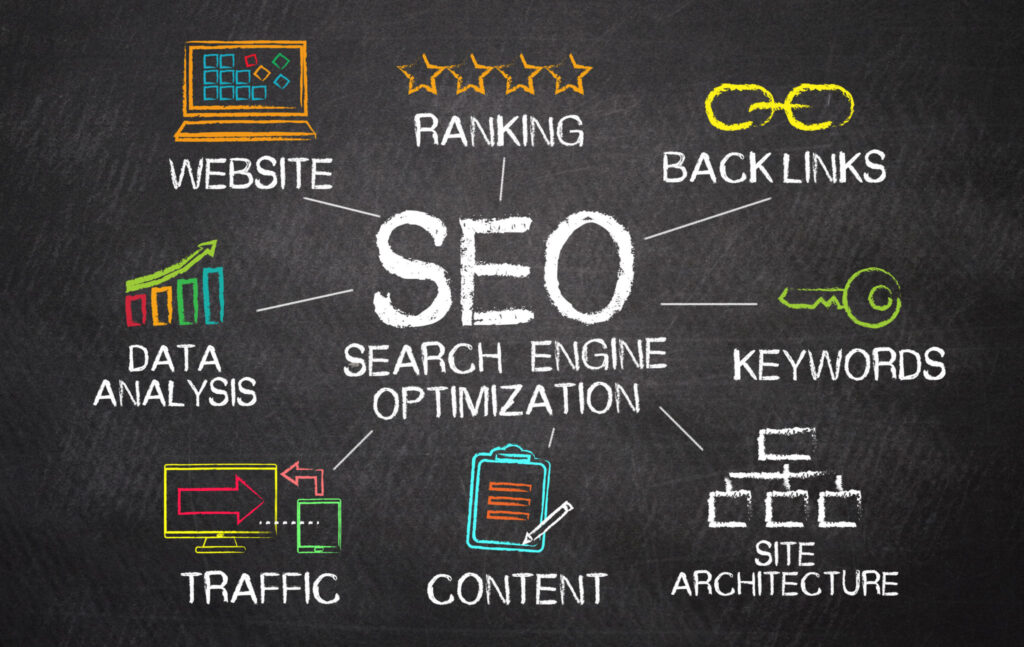
- Build an SEO-friendly website with a solid technical foundation
- Research the right keywords for your audience and industry
- Create genuinely helpful, expert-level content
- Optimise technical SEO (speed, mobile, indexing, Core Web Vitals)
- Improve local SEO and your Google Business Profile
- Earn quality backlinks from relevant, trustworthy sites
- Build topical authority by covering your subject area in depth
- Track performance and adjust your strategy over time
We’ll go through each of these in detail below.
Weak Online Presence vs Strong Online Presence
| Weak Online Presence | Strong Online Presence |
| Few visitors | Consistent organic traffic |
| Poor rankings | First-page visibility |
| Generic content | Helpful, expert content |
| Slow website | Fast, well-optimised website |
| Weak authority | Trusted brand in your niche |
| Low conversions | More qualified leads |
Why Your Online Presence Matters
Your online presence is often the first impression a potential customer has of your business, long before they ever speak to you directly. A well-optimised website that ranks for the right terms signals credibility: if Google trusts you enough to show you on page one, visitors are more likely to trust you too. That trust translates directly into customer behaviour. People research a business online before calling, booking, or buying, and a thin, outdated, or hard-to-find website quietly costs you leads every single day.
Beyond individual sales, a strong online presence compounds. Every piece of content, every backlink, and every improvement to your site adds to a foundation that keeps working for you long after it’s published, unlike paid ads, which stop the moment you stop paying. That’s what makes SEO such a powerful driver of long-term business growth: it builds an asset, not just a campaign.
What Is SEO?
SEO stands for Search Engine Optimisation, the practice of improving a website so that search engines like Google can understand it, trust it, and rank it well for relevant searches. A few concepts sit at the core of every SEO strategy:
- Organic search: the unpaid, natural results that appear because a page is genuinely relevant and well-optimised, as opposed to paid adverts.
- Search intent: understanding what someone actually wants when they type a query, so your content answers the right question in the right format.
- User experience: how easy, fast, and pleasant your site is to use, which increasingly influences rankings directly.
- E-E-A-T: Experience, Expertise, Authoritativeness, and Trustworthiness. Google increasingly rewards content that demonstrates real, first-hand knowledge, not just keyword coverage.
Understanding these fundamentals matters more than chasing individual “tricks,” because Google’s algorithm changes constantly, but the underlying goal of rewarding genuinely useful, trustworthy content has stayed consistent for years.
10 Proven Ways to Build a Strong Online Presence with SEO
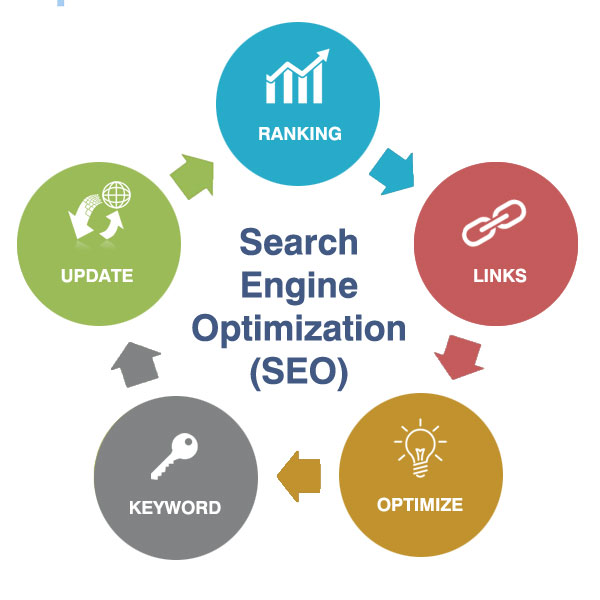
1. Build an SEO-Friendly Website
Everything else in this guide depends on your website being built the right way from the ground up. That means a clean URL structure, a logical site hierarchy, HTTPS security, and a design that works well on both desktop and mobile. If your website’s foundation is weak, no amount of content or backlinks will fully make up for it.
2. Perform Keyword Research
Before you write a single page of content, you need to know what your customers are actually searching for. Keyword research identifies the exact terms and phrases, and the intent behind them, that your target audience uses, so you can build content around real demand rather than guesswork. Look for a mix of high-volume terms and more specific, lower-competition long-tail phrases that convert well.
3. Create Helpful Content
Google’s stated goal is to reward content that’s genuinely useful to the person reading it, not content written purely to satisfy an algorithm. Focus on answering real questions, solving real problems, and covering topics with the kind of depth and first-hand insight that thin, generic articles can’t match.
4. Optimise On-Page SEO
On-page SEO covers the elements within a page itself: title tags, meta descriptions, header structure, image alt text, and internal links. These details help search engines understand exactly what a page is about and how it fits into the wider site, and they’re often the fastest wins available on an existing website.
5. Improve Technical SEO
Technical SEO ensures search engines can crawl, index, and understand your site properly. This includes site speed, mobile-friendliness, a clean XML sitemap, and strong Core Web Vitals, Google’s measurements of loading speed, interactivity, and visual stability. A technically sound site isn’t glamorous, but it’s the plumbing that everything else relies on.
6. Build Quality Backlinks
A backlink is a link from another website to yours, and it remains one of the strongest trust signals in SEO. Rather than chasing volume, focus on earning links from relevant, reputable sites through digital PR, guest content, partnerships, or simply publishing content that other sites want to reference.
7. Optimise Your Google Business Profile
For any business with a physical location or a defined service area, an optimised Google Business Profile is essential. Accurate opening hours, categories, photos, and regularly updated posts all help you appear in local map results and the “near me” searches that drive real footfall and enquiries.
8. Strengthen Local SEO
Local SEO goes beyond your Google Business Profile. It includes consistent business citations across directories, location-specific content, and reviews. For UK small and local businesses, this is often where the fastest, most cost-effective wins are found.
9. Improve User Experience
A fast-loading, easy-to-navigate, mobile-friendly site keeps visitors engaged and reduces bounce rates, both of which support your rankings indirectly and your conversions directly. Good UX and good SEO have become increasingly inseparable.
10. Track SEO Performance
None of the above matters if you’re not measuring it. Tools like Google Search Console and Google Analytics let you track rankings, organic traffic, and conversions over time, so you can see what’s working and refine what isn’t.
How AI Search Is Changing Online Visibility
Search is evolving quickly, and a strong online presence today has to account for AI-driven results, not just the traditional blue-link results page. AI Overviews and conversational search tools are increasingly answering questions directly, which makes a few newer concepts worth understanding:
- GEO (Generative Engine Optimisation): optimising content so that AI tools like Google’s AI Overviews, ChatGPT, and Perplexity are more likely to reference and cite your business when answering related questions.
- AEO (Answer Engine Optimisation): structuring content so that clear, direct answers are easy for both search engines and AI systems to extract.
- Semantic search: search engines increasingly understand meaning and context, not just exact keyword matches, so content needs to cover a topic thoroughly rather than repeating a single phrase.
- Topical authority: demonstrating deep, well-rounded coverage of a subject area, which both traditional rankings and AI systems reward.
- Structured data: schema markup that helps search engines and AI tools understand exactly what your content contains, from FAQs to reviews to products.
Businesses that adapt their SEO strategy to include AI visibility now will be far better positioned as more searches shift toward AI-generated answers.
Common SEO Mistakes to Avoid
Even well-intentioned SEO efforts can stall, or actively backfire, if they fall into these common traps:
- Keyword stuffing: repeating a phrase unnaturally in a way that reads poorly and can trigger penalties
- Duplicate pages: near-identical content across multiple pages, which confuses search engines about which to rank
- Thin content: pages that don’t fully answer the reader’s question
- Poor internal linking: leaving pages isolated instead of connected in a logical structure
- Slow website: every extra second of load time increases the chance a visitor leaves
- Ignoring mobile users: the majority of searches now happen on mobile devices
- Buying backlinks: low-quality, purchased links can do more harm than good and risk penalties
SEO vs Paid Advertising
| SEO | Paid Advertising | |
| Cost over time | Builds long-term value; cost per lead tends to fall | Costs continue for as long as ads run |
| Results speed | Gradual, builds over months | Immediate visibility |
| Longevity | Keeps working after publication | Stops the moment spend stops |
| Trust | Organic results are seen as more credible | Clearly marked as an advert |
| Best use | Long-term growth and brand authority | Short-term campaigns, product launches, testing offers |
Most businesses benefit from a blend of both: paid advertising for immediate visibility and testing, SEO for durable, compounding growth.
How Long Does SEO Take?
SEO is a long-term strategy, and it’s worth setting realistic expectations from the outset. Most businesses start to see meaningful movement in rankings and traffic within three to six months, with more substantial results building over six to twelve months, particularly in competitive industries or locations. Factors like your website’s current state, your industry’s competitiveness, and how consistently content and technical work is carried out all affect the timeline. The businesses that get the best results tend to treat SEO as an ongoing process rather than a one-off project.
Why Businesses Choose Prime Flow Digital
Building a strong online presence takes ongoing technical, content, and local SEO work, which is exactly where an experienced partner makes the difference. Prime Flow Digital brings together experienced SEO specialists who build bespoke strategies rather than one-size-fits-all packages, covering technical SEO, content marketing, local and national SEO, and increasingly, AI-ready optimisation for the way search is changing. Clients get transparent reporting and a dedicated account manager, with a consistently white-hat approach that protects your site’s long-term standing with Google rather than chasing short-term shortcuts.
How to Get Started
- Audit your current website for technical issues and content gaps
- Identify the keywords your customers are actually searching for
- Optimise your Google Business Profile if you serve a local area
- Build a content plan that answers real customer questions
- Fix technical issues affecting speed and mobile usability
- Start building relevant, quality backlinks
- Track your rankings, traffic, and conversions monthly
- Review and adjust your strategy every quarter
Conclusion
Building a strong online presence isn’t a single task you complete and forget, it’s an ongoing combination of SEO fundamentals, helpful content, technical performance, local visibility, and consistent brand authority. Businesses that treat it this way, rather than looking for a quick fix, are the ones that see compounding growth in traffic, leads, and reputation over time.
If you’d like an expert assessment of where your website currently stands, get in touch with Prime Flow Digital for a free SEO consultation. We’ll show you exactly where the opportunities are.
Frequently Asked Questions
Online presence refers to how visible and credible your business appears across the web, including your website, Google Business Profile, social channels, and reviews, with SEO being the primary way to strengthen that visibility in search results.
SEO improves visibility by helping search engines understand and trust your website, so it ranks higher for the terms your customers are actually searching for, driving more qualified organic traffic.
Most businesses see initial movement within three to six months, with stronger results building over six to twelve months, depending on competition and consistency of effort.
Neither is universally “better.” SEO builds long-term, compounding value, while paid advertising delivers immediate visibility. Many businesses benefit from using both together.
Local SEO is the practice of optimizing your online presence to attract more business from local searches, including your Google Business Profile, local citations, and location-specific content.
Regularly, both to keep content accurate and relevant, and because search engines tend to favour sites that are actively maintained over ones left untouched for years.
Content is how you answer the questions your customers are searching for. Helpful, well-structured content is what earns rankings, builds trust, and supports conversions.
Yes, particularly through local SEO and by targeting specific, less competitive keywords where large brands often don’t focus their content efforts.
Prime Flow Digital combines technical SEO expertise, tailored content strategy, and local and national SEO experience with transparent reporting, helping businesses build an online presence that drives real, measurable growth.