Cheap SEO often saves money initially, but it can lead to poor rankings, Google penalties, wasted marketing budgets, low-quality backlinks, and lost business opportunities. This is exactly why cheap SEO services can cost your business more than investing in a professional strategy from the start. Investing in professional SEO services usually delivers a far better long-term return because it builds sustainable rankings instead of short-lived spikes that quietly cost you later.
That last part is the detail most cheap SEO services or low cost SEO services fail to mention. Many businesses searching for affordable SEO services assume a lower price means better value, but cheap SEO is bad when it relies on shortcuts instead of proven strategies. Cheap SEO rarely fails immediately. It fails six months later, after automated backlinks have been flagged, after AI-generated content has failed to improve rankings, and after you’ve paid twice: once for ineffective work and again for a professional SEO agency to repair the damage. Lost rankings, lost revenue, the risk of a Google penalty, poor-quality work, and the opportunity cost of months spent going nowhere are the hidden costs that explain why cheap SEO services can cost your business more.
In this guide, you’ll discover why cheap SEO is bad, what separates professional SEO services from low-quality alternatives, why SEO pricing in the UK varies so much, and how to hire an SEO agency that focuses on sustainable growth instead of quick wins. Whether you’re comparing SEO services UK providers or reviewing SEO agency UK quotes, this guide will help you make a smarter investment for your business.
Quick Answer
Cheap SEO often saves money initially but can lead to poor rankings, Google penalties, wasted marketing budgets, low-quality backlinks, and lost business opportunities. Investing in professional SEO usually delivers a far better long-term return, because it’s built on strategy and sustainable practices rather than automation and shortcuts.
Cheap SEO vs. Professional SEO at a Glance
| Cheap SEO | Professional SEO |
| Automated work | Custom strategy |
| Spam backlinks | Quality backlinks |
| AI-generated content with no oversight | Expert-written, reviewed content |
| No reporting | Transparent reporting |
| No technical SEO | Complete on-site and technical optimisation |
| Short-term gains (if any) | Long-term, compounding growth |
| Hidden risks | Sustainable ROI |
What Is Cheap SEO?
Cheap SEO is easy to spot once you know what to look for, but it’s designed to look like a bargain at first glance. It usually shows up as a flat £99-a-month package, sold with promises that sound too good to be true because they are: guaranteed page-one rankings, “hundreds of backlinks,” or first-page results within 30 days.
Behind the pricing, the delivery model is almost always the same. The work is outsourced to whoever is cheapest that month, often with no consistency in who’s actually handling your account. Tasks are automated wherever possible: backlinks purchased in bulk from link farms, content generated by AI with no human review, and technical fixes skipped entirely because they take real expertise and real time.
None of this is inherently about the price tag alone. It’s about what that price tag can and can’t buy. Genuine SEO work, done by a specialist, takes hours of research, writing, technical auditing, and strategy. A £99 monthly fee simply cannot cover that labour, which means something else has to give: usually quality, sometimes compliance with Google’s guidelines, and often both.
Why Is Professional SEO More Expensive?
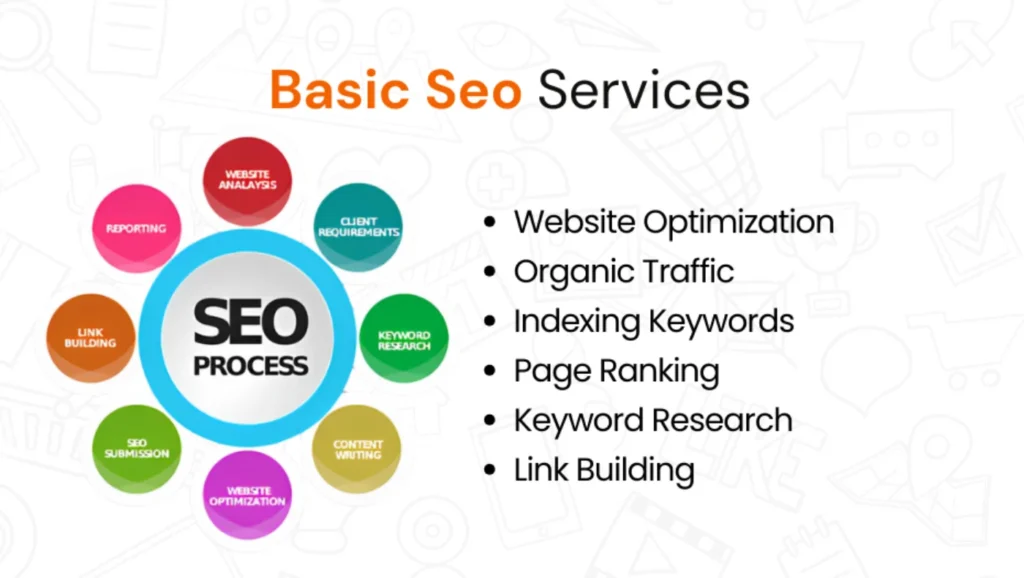
Professional SEO costs more because it actually involves more, delivered by people qualified to do it properly. A realistic monthly retainer covers a genuinely wide scope of work:
Technical SEO — auditing site speed, crawlability, indexation, mobile usability, and structured data, then fixing what’s broken.
Content writing — research-backed, well-structured content written by someone who understands both the subject and how search engines evaluate it, not spun or mass-produced.
Link building — earning links from relevant, reputable sites through outreach and digital PR, which takes real relationship-building rather than a bulk purchase.
UX and CRO — making sure the site doesn’t just rank, but actually converts visitors once they arrive, since traffic without conversions doesn’t grow a business.
Local SEO — managing Google Business Profiles, local citations, and location-specific content for businesses that rely on regional visibility.
Reporting — showing, in plain language, what’s been done and what impact it’s having, rather than a vague monthly invoice with no explanation attached.
AI search optimisation — increasingly, structuring content so it’s understood and trusted by AI-generated overviews and answer engines, not just traditional search rankings.
Ongoing optimisation — SEO isn’t a one-off task. Rankings need to be defended and built on continuously as competitors, algorithms, and search behaviour all keep shifting.
Every one of those requires a specialist’s time. That’s why the price difference between cheap and professional SEO isn’t really about profit margin: it reflects the difference between one overstretched generalist trying to do everything and a team of specialists each doing their part properly.
7 Hidden Costs of Cheap SEO
The sticker price is only the beginning. Here’s what tends to show up later, once the initial saving has already been spent.
1. Low Quality Content
Content churned out by automation or unqualified writers, with no real research or editorial oversight, rarely ranks and even more rarely converts. Search engines are increasingly good at recognising thin, generic, or AI-spun content that doesn’t demonstrate genuine expertise, and readers notice just as quickly. The result is pages that sit on your site doing nothing for months, sometimes actively damaging how trustworthy your site looks overall.
2. Spam Backlinks
Cheap SEO providers often rely on bulk-purchased links from low-quality directories, private blog networks, or link farms because they’re fast and inexpensive to acquire. Google’s algorithms are specifically designed to detect these patterns. Once they’re flagged, a site’s rankings can drop suddenly and sharply, and disavowing spam links after the fact is a slow, technical process that costs more than doing it properly from the start.
3. Google Penalties
This is the worst-case scenario, and it’s a direct consequence of the tactics above. A manual action or algorithmic penalty from Google can wipe out a website’s visibility overnight, sometimes for months at a time, while the business works to identify every problematic link or piece of content and get it resolved. Recovering from a penalty is almost always slower and more expensive than the “savings” that caused it in the first place.
4. Poor User Experience
Cheap SEO rarely touches on-site experience at all, since UX work takes real design and development time that a £99 package simply doesn’t budget for. Slow load times, clunky navigation, and poorly structured pages all quietly push potential customers away before they ever get in touch, regardless of how the site happens to be ranking that month.
5. Wasted Time
Every month spent on strategies that don’t work is a month competitors spend building genuine authority. SEO compounds over time, so months lost to ineffective tactics don’t just fail to help; they actively widen the gap between you and competitors who invested properly from the start.
6. Lost Leads
Even if cheap SEO manages some short-term ranking movement, poor targeting, weak content, and bad UX usually mean visitors don’t convert into enquiries or sales. Traffic without qualified leads doesn’t grow a business. It just makes the analytics dashboard look busier.
7. Paying Twice
This is the cost most business owners underestimate until it happens to them. After months with a cheap provider, many businesses end up hiring a professional agency anyway, except now that agency also has to clean up spam backlinks, rewrite thin content, and repair any technical damage before real progress can even begin. The cheap option ends up being the most expensive one once the cleanup bill is added.
Cheap SEO vs. Professional SEO in Detail
| Factor | Cheap SEO | Professional SEO |
| Strategy | One-size-fits-all package | Tailored to your business, market, and goals |
| Content | Automated or outsourced, minimal review | Researched, expert-written, and edited |
| Link building | Bulk, low-quality, high-risk | Earned, relevant, reputable |
| Technical SEO | Rarely included | Core part of the service |
| Reporting | Vague or absent | Clear, regular, tied to business outcomes |
| Timeline honesty | Promises instant results | Realistic timelines, typically 4–6 months for traction |
| Risk profile | High risk of penalties | Google-compliant, sustainable practices |
| Long-term outcome | Rankings plateau or collapse | Compounding growth over time |
How Cheap SEO Hurts Your Brand
The damage from cheap SEO isn’t limited to search rankings. It extends into how customers perceive the business as a whole. Spammy backlinks and thin content can quietly erode search engines’ trust in a domain, but they can also erode a visitor’s trust the moment they land on a page that reads as generic or poorly put together.
Reputation and customer experience are closely linked here. A site with slow load times, awkward navigation, or content that clearly wasn’t written with real expertise doesn’t just underperform in rankings; it actively signals to visitors that the business behind it might cut corners elsewhere too. That perception directly affects conversion rate, since people are far less likely to enquire with, or buy from, a business whose website doesn’t feel credible.
Signs You’re Buying Cheap SEO
A few warning signs tend to appear again and again, regardless of how a provider brands the offer:
- ✓ Guaranteed rankings or guaranteed page-one positions
- ✓ Promises of “thousands of backlinks a month”
- ✓ Flat £99-style packages with no scoping conversation
- ✓ No strategy call before you’re asked to sign up
- ✓ No initial audit of your existing site
- ✓ No regular reporting once work begins
- ✓ No case studies or verifiable past results
- ✓ Generic, copy-paste proposals that don’t reference your actual business or market
Spotting one of these on its own isn’t necessarily disqualifying. Spotting several together is a strong signal to walk away.
What Professional SEO Should Include
A genuinely professional SEO service should be built around a full, coordinated scope of work rather than a single narrow tactic:
- Technical SEO — site health, crawlability, indexation, and Core Web Vitals
- Keyword research — understanding what your customers are actually searching for
- Content strategy — a plan for what to create and why, not just a stream of blog posts
- On-page SEO — titles, headings, internal structure, and content optimisation
- Off-page SEO — ethical link building and digital PR
- Internal linking — connecting related content to strengthen topical relevance
- Monthly reporting — clear updates tied to rankings, traffic, and business outcomes
- Local SEO — for businesses that depend on regional visibility
- Conversion optimisation — making sure traffic actually turns into enquiries or sales
- AI search optimisation — structuring content to perform well in AI-generated overviews and answer engines, not just traditional search results
If an agency’s proposal only covers one or two of these, it’s worth asking what happened to the rest.
Why Businesses Choose Prime Flow Digital
At Prime Flow Digital, we built our service around everything cheap SEO leaves out, because we’ve seen firsthand what it costs businesses to fix the damage afterwards.
Transparent pricing. We explain exactly what’s included in every package, with no hidden fees and no long-term lock-in designed to trap you in a contract that isn’t working.
Experienced specialists, not generalists. Your account is handled by a dedicated account manager working alongside genuine technical SEO expertise, not a single overstretched freelancer juggling dozens of clients.
Bespoke strategy. We build a strategy around your business, your market, and your goals, rather than applying the same template to every client regardless of fit.
High-quality, expert-written content. Every piece of content is researched and written to genuinely help your audience, not generated in bulk and left unreviewed.
Ethical, white-hat SEO. We follow Google’s guidelines because it’s the only approach that holds up over years, not just months.
Data-driven, transparent reporting. You’ll always know what’s been done and what impact it’s having, tied to leads and revenue rather than vanity metrics alone.
Full-spectrum coverage. Local SEO, national SEO, eCommerce SEO, and AI-ready optimisation, all delivered together rather than piecemeal.
We’re proud of the results this approach has produced for UK businesses, including traffic growth exceeding 500% for some clients and over 10,000 keywords ranked across our client base, all backed by transparent reporting and strategies genuinely tailored to the UK market rather than templated internationally.
How to Choose the Right SEO Agency
Before signing with any provider, it’s worth working through a short checklist:
- Do they offer a genuine audit and strategy call before quoting, rather than a generic price list?
- Can they show recent case studies tied to business outcomes, not just rankings?
- Are they transparent about their link-building and content methods when you ask directly?
- Will you know who’s actually working on your account, and how often you’ll hear from them?
- Do they provide clear, regular reporting that explains progress in plain language?
- Are their timelines realistic, typically framed in months rather than days?
- Do they avoid guaranteeing specific rankings, since no legitimate agency controls Google’s algorithm?
- Are they upfront about what’s included in the price, and what would need additional budget?
A provider that answers these questions clearly and confidently is usually one worth trusting with a long-term investment like SEO.
Conclusion
Cheap SEO looks affordable today. That’s precisely the appeal, and precisely the trap. The real cost shows up later: in rankings that stall or collapse, in penalties that take months to recover from, in content and links that need to be undone before real progress can begin, and in the leads and revenue lost while all of that gets sorted out.
Professional SEO becomes cheaper over the next three to five years, not because the monthly fee is lower, but because it builds sustainable rankings, qualified traffic, and consistent leads instead of creating expensive problems to fix later. It’s an investment that compounds, rather than one that quietly erodes.
If you’re comparing SEO quotes and want a strategy built around your business rather than a one-size-fits-all package, get in touch with Prime Flow Digital for a free SEO consultation. We’ll talk you through exactly what a sustainable strategy would look like for your business, no obligation, no jargon, and no shortcuts.
Frequently Asked Questions
Why is professional SEO expensive?
Professional SEO covers technical optimization, expert content, ethical link building, UX, reporting, and ongoing strategy, all delivered by specialists whose time and expertise genuinely cost more than automated or outsourced alternatives.
Can cheap SEO hurt my website?
Yes. Spam backlinks and thin, low-quality content can trigger Google penalties or algorithmic devaluation, which can significantly reduce a site’s visibility and take months to recover from.
Is cheap SEO worth it?
Rarely. Cheap SEO can offer short-term savings, but it often relies on tactics that risk Google penalties, produce low-quality content, and fail to generate real leads, meaning businesses frequently end up paying more later to fix the damage.
How much should SEO cost in the UK?
Pricing varies by scope and business size, but sustainable, professional SEO typically requires a meaningful monthly investment reflecting real specialist time. What matters most is whether an agency can clearly explain what that investment includes and how progress will be measured.
What is white-hat SEO?
White-hat SEO refers to ethical practices that follow Google’s guidelines, focusing on genuinely helpful content and quality link building, as opposed to black-hat tactics that rely on manipulation and shortcuts.
How long does SEO take?
Most businesses start to see meaningful traction within four to six months, with more significant results typically building over six to twelve months and beyond as authority compounds.
Can bad SEO be fixed?
Usually, yes, though it takes time. Recovering from spam backlinks, thin content, or a Google penalty involves auditing the damage, disavowing harmful links, rewriting weak content, and rebuilding trust with search engines, which is a slower process than doing it properly the first time.
How do I choose the right SEO agency?
Look for transparent pricing, a genuine audit and strategy process, willingness to explain their methods, realistic timelines, and case studies tied to business outcomes rather than rankings alone.
Is SEO better than Google Ads?
They serve different purposes. Google Ads can deliver quick visibility for a price per click, while SEO builds compounding, organic visibility that continues delivering traffic long after the initial investment, often at a stronger long-term return.
Why choose Prime Flow Digital for SEO?
Prime Flow Digital combines transparent pricing, ethical white-hat practices, and specialist expertise across technical, content, and local SEO, with a track record of measurable results for UK businesses and reporting built around real business outcomes rather than vanity metrics.